

Meet the research team
Our Team
Our inter-disciplinary team coordinates and facilitates events related to the project and is co-editing the Corporate Strategies volume.

Dr. Kesha Fevrier
Principal Investigator
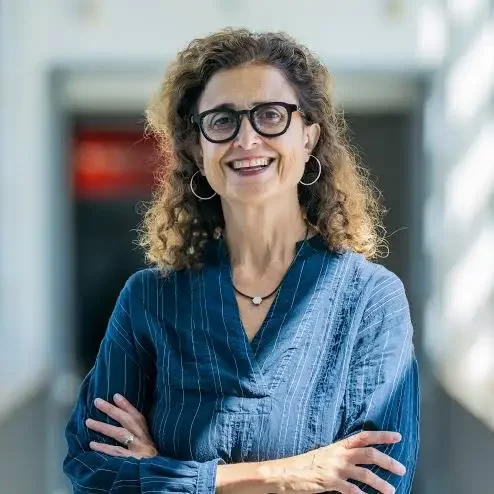
Dr. Kesha Fevrier is Assistant Professor and Queen’s National Scholar in Black Studies and the Department of Geography and Planning at Queen’s University. Her research unfolds broadly at the intersection of race and space. She is particularly interested in how this co-constitutive relationship informs the everyday lived experiences of marginalized groups in the global South. Through a case study of electronic waste recycling in Ghana, her last research project demonstrated how the politics of race and ethnicity coalesce in Ghana to inform the value of space, shaping through discriminatory and harmful acts, the urban sphere, and the identities and experiences of informal waste workers, creating in its wake distinct, uneven, racial/ethnic geographies and landscapes. Her immediate research interest remains focused on unpacking the idea of waste-as-commodity and exploring the ability of waste in commodity-form to transform local geographies as it traverses geo-political borders. In paying particular attention to the tensions, conflicts and the socio-ecological, and spatial transformations produced, and the livelihoods shaped as a result of the circulation of things, Her research offers critical insights into global material flows and the connections, ruptures and (dis)articulations that define such flows across space.
Dr. Anna Zalik
Project Co-Applicant
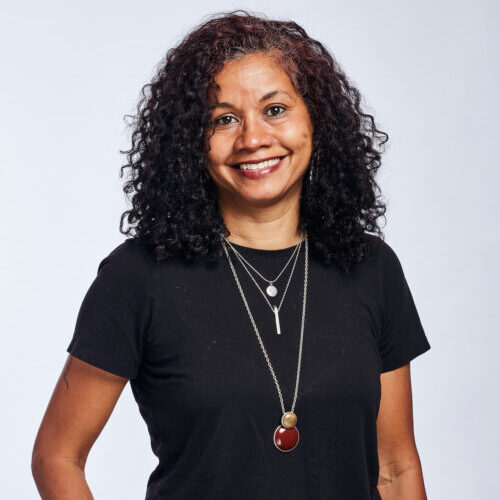
Dr. Anna Zalik is Professor in the Faculty of Environmental & Urban Change at York University where she teaches in the areas of Global Geography, Political Ecology, Agrarian Studies and Critical Development Studies. Her research, in conjunction with colleagues and community organizations, examines and critiques the political ecology and political economy of industrial extraction, with a focus on the merging of corporate security and social welfare interventions in strategic exporters. She has received SSHRC funding for her research on topics related to the political economy of hydrocarbons, substantive industrial transparency, and the contested regulation of extractive industries in oceans beyond national jurisdiction. Emerging from this work and informed by critiques of capitalism and persistent colonialism/imperialism, her current projects center on Canadian investment in the denationalization of the Mexican energy sector and financial risk in new extractive frontiers in the global oceans/seabed beyond national jurisdiction. She has given invited presentations at various universities internationally, among them the UNAM, Mexico City, the Peace Research Institute – Oslo, and the University of Chicago Human Rights Centre. In 2014, she was the invited keynote speaker to the AAG Energy and Environment specialty group.
Dr. Alissa Trotz
Project Co-Applicant
Dr. Alissa Trotz is a Professor of Caribbean Studies at New College and the Director of Women and Gender Studies. She is also affiliate faculty at the Dame Nita Barrow Institute of Gender and Development Studies at the University of the West Indies, Cave Hill, Barbados; and a member of the O’Neill-Lancet Commission on Racism, Structural Discrimination, and Global Health. She is a resource person with Red Thread Women’s Organization in Guyana (also see Red Thread’s Youtube Channel) and editor of “In the Diaspora,” a weekly newspaper column in the Guyanese daily, Stabroek News. Alissa’s work is situated within a tradition of feminist political economy, and a Caribbean feminist tradition in particular, that takes an intersectional approach to social reproduction as a starting point and node of interrogation to think through histories and processes of dispossession and their contemporary manifestations. Her research trajectory unfolds across related themes that address processes of social reproduction, neoliberalisation & Caribbean feminisms; coloniality, racial formations, gendered difference and violence; transnational migration, remittances and diaspora engagement; and Caribbean knowledge production. Her current research looks at diaspora, indigeneity and extractivism in colonial Guyana.
Dr. Alie Hermanutz
Research Collaborator
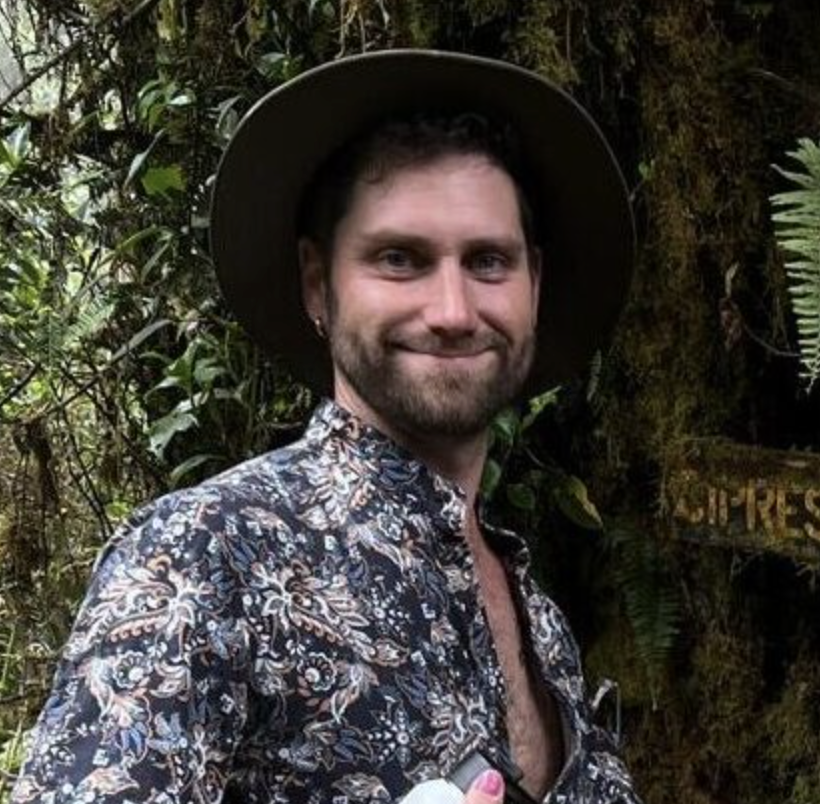
Dr. Alie Hermanutz is an inter-disciplinary academic working in the political ecology and political economy traditions with a professional background in the environmental monitoring and sampling. They hold a PhD from York University’s Department of Politics. Their dissertation research analyzed the conditions under which fossil fuel assets are deserted by their operators in Alberta, Canada. In this research, I employed interview data, regulatory grey literature, and geological/ecological scientific publications to develop a critical environmental history of the province’s resource development. They are in the process of editing their dissertation into a book manuscript entitled Slow Motion Landslide: Deserted Fossil Fuel Assets and Political Power in Alberta, to be published by UBC Press in 2027. While at York University, they served in several roles for the student and labour unions on campus, including as the Vice President Community Relations for the York University Graduate Students’ Association and multiple positions on CUPE 3903‘s Executive Committee during collective bargaining and subsequent strike. You can learn more about their work at aliehermanutz.com.